Keep the subject. Change the light, medium, or color vocabulary. See the added words beside the actual image they produced.
3 subjects · 18 actual outputs
One shared prompt, six expressions
Each series uses the same base prompt. The complete submitted prompt is the base text, two line breaks, then the exact words under each image. The green block is the part that changed.
One independent output per phrase. The phrases change a bundle of stylistic cues, not a single isolated variable. Text keeps the subject description fixed; it does not lock object geometry or a person’s identity. The observations describe these outputs, not a guaranteed effect on every model.
Images are full-resolution lossless WebP copies of the unedited PNG originals, with identical decoded pixels. Model, reasoning, seed, and quality controls are unavailable in this tool.
Separates subject, medium, lighting, color, mood, and composition. These axes informed the series; these images were not generated with Midjourney. · Verified: 2026-10-04 · Publication date: unknown
Black Forest Labs / Core FLUX Prompting Principles
Describes lighting vocabulary and changing one element during iteration. It is guidance for FLUX, not evidence of the backend used here. · Verified: 2026-10-04 · Publication date: unknown
Distinguishes image generation and editing, with controls depending on the interface. The native tool used here does not expose model, reasoning, seed, or quality selection. · Verified: 2026-10-04 · Publication date: unknown
teapot-lighting
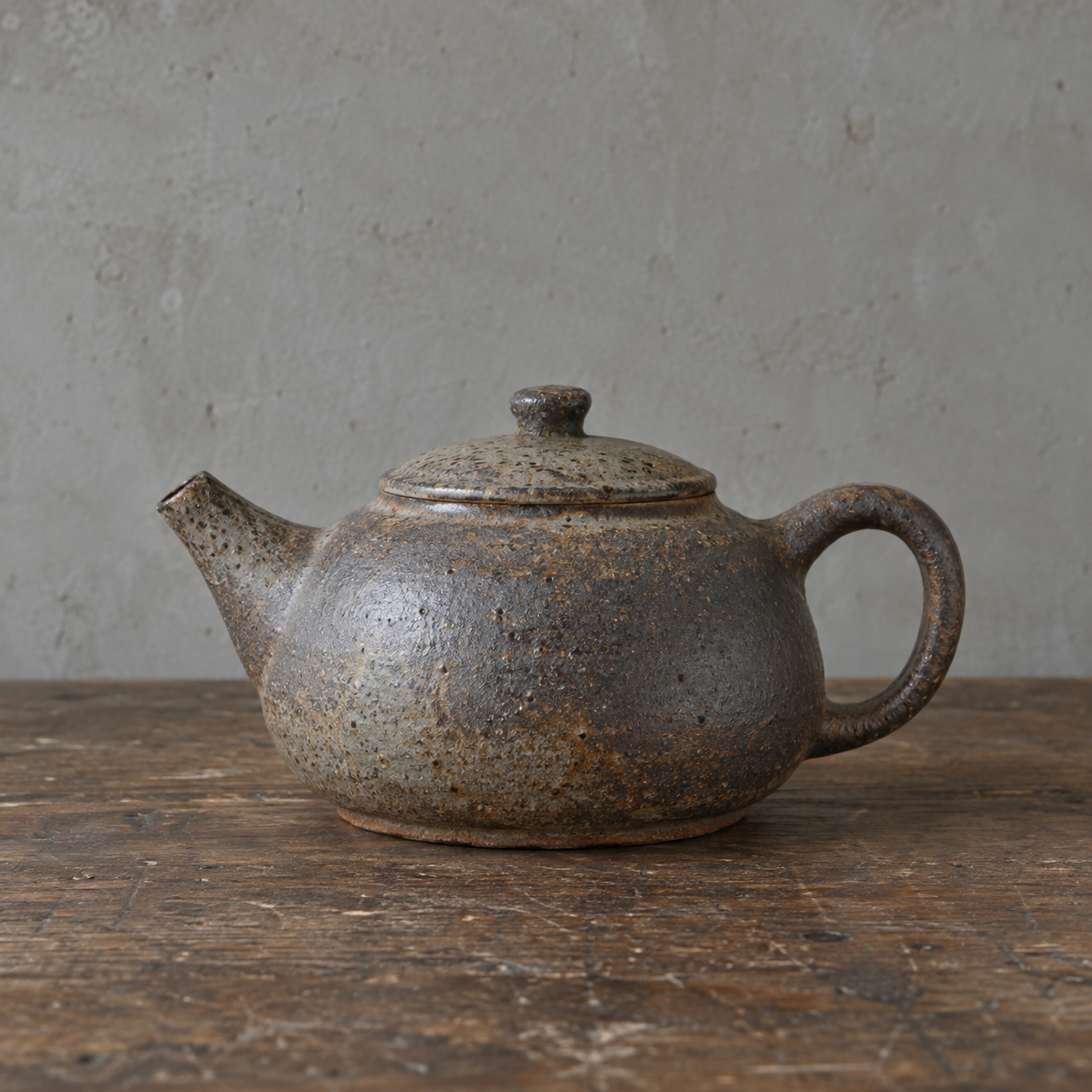
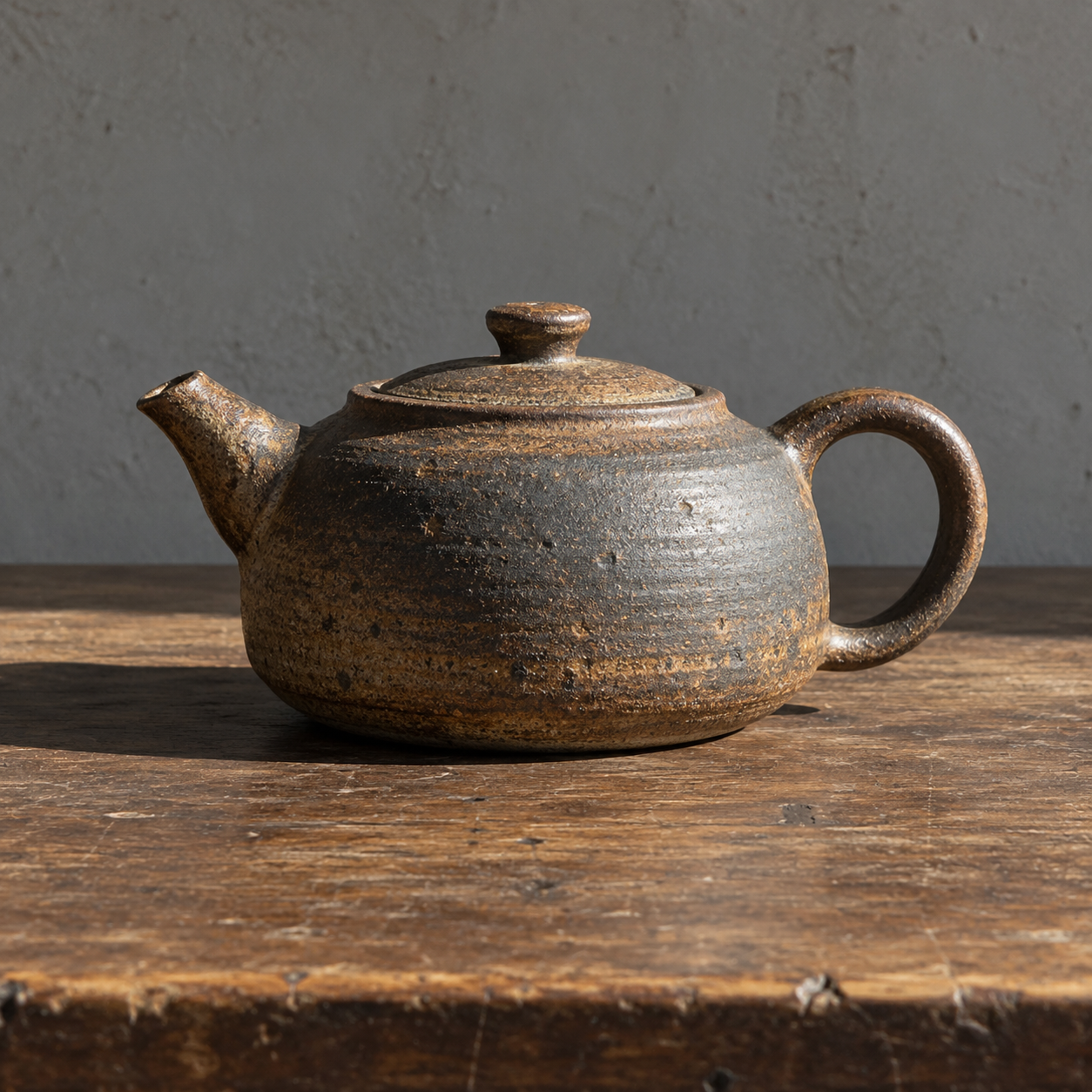
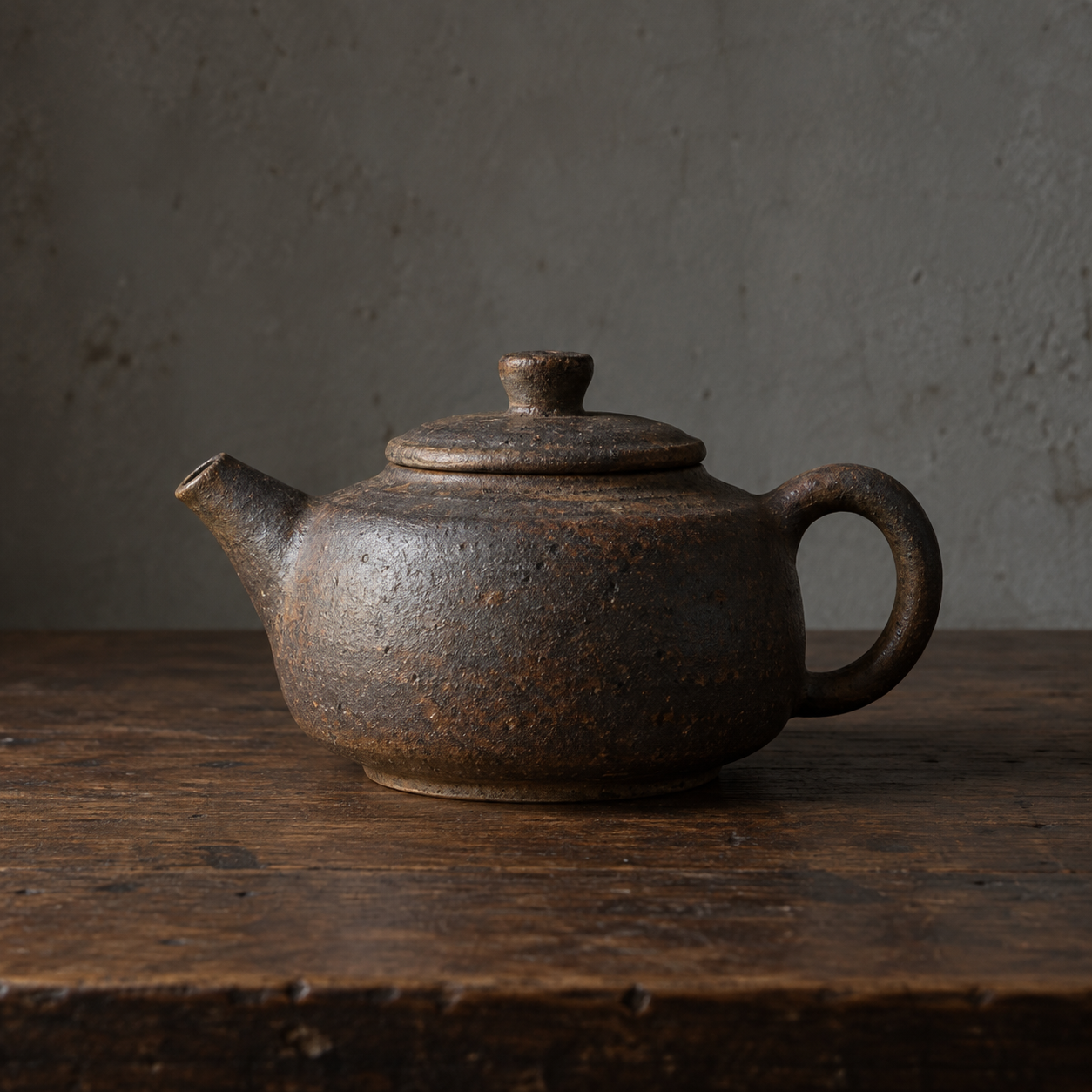
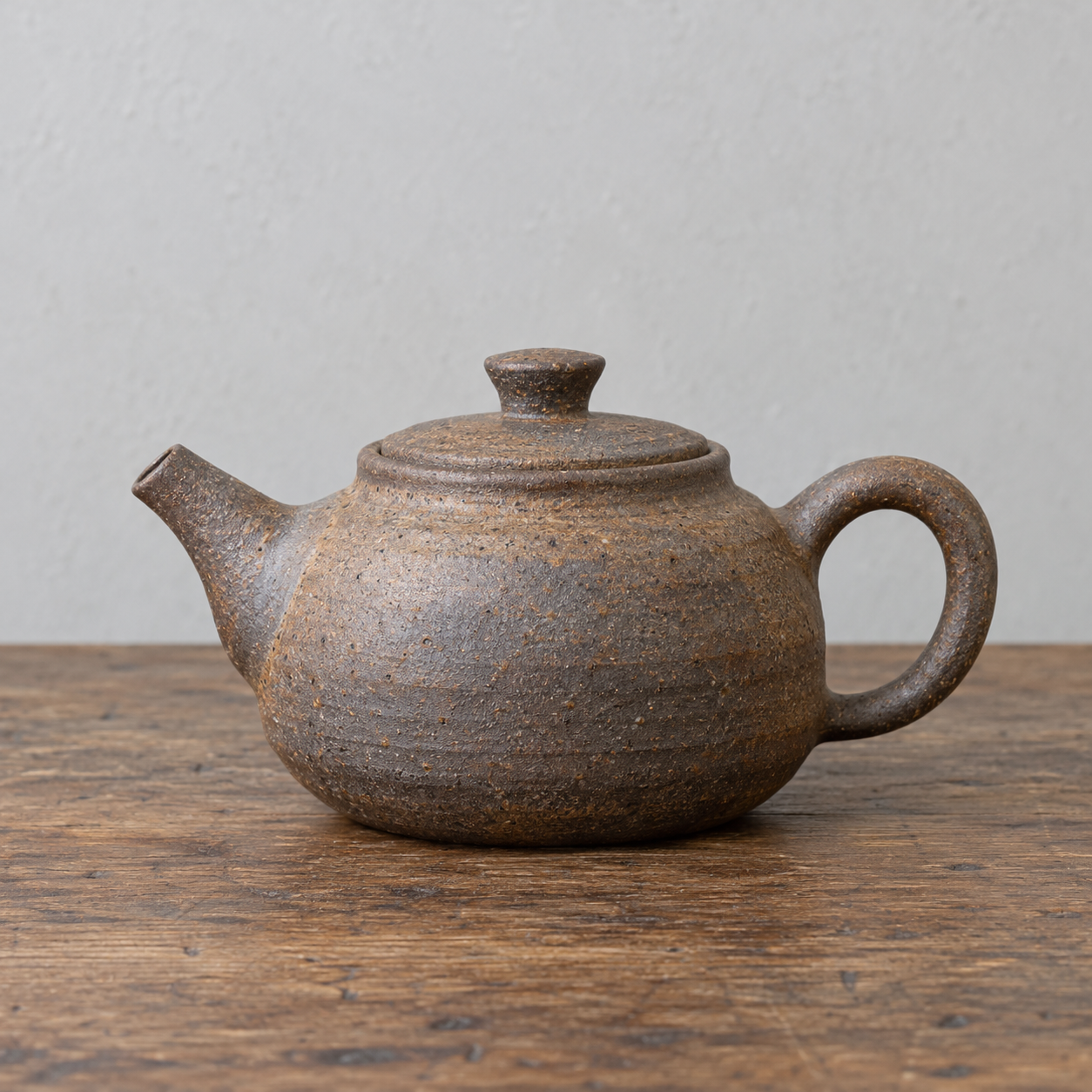
Lighting words on one ceramic teapot
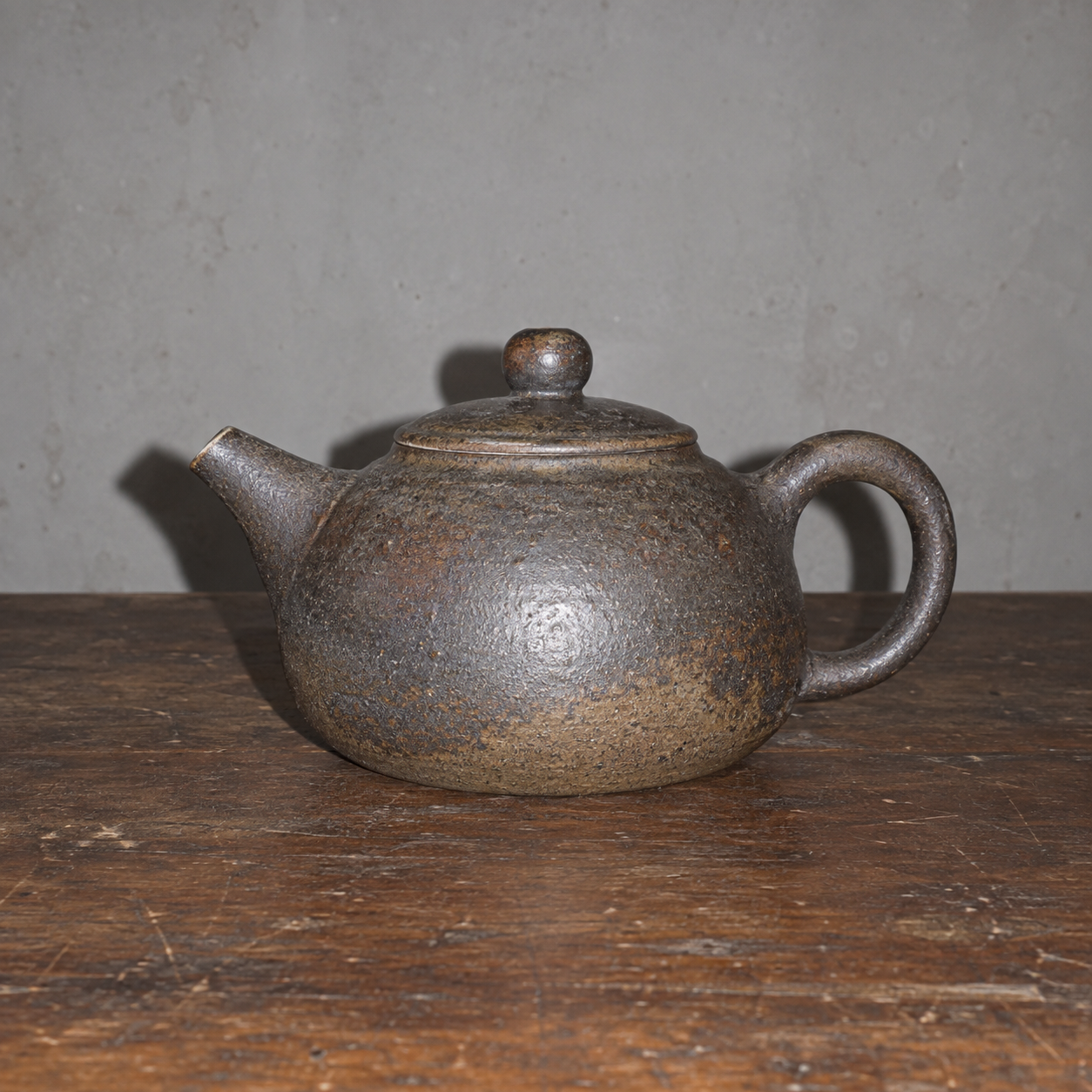
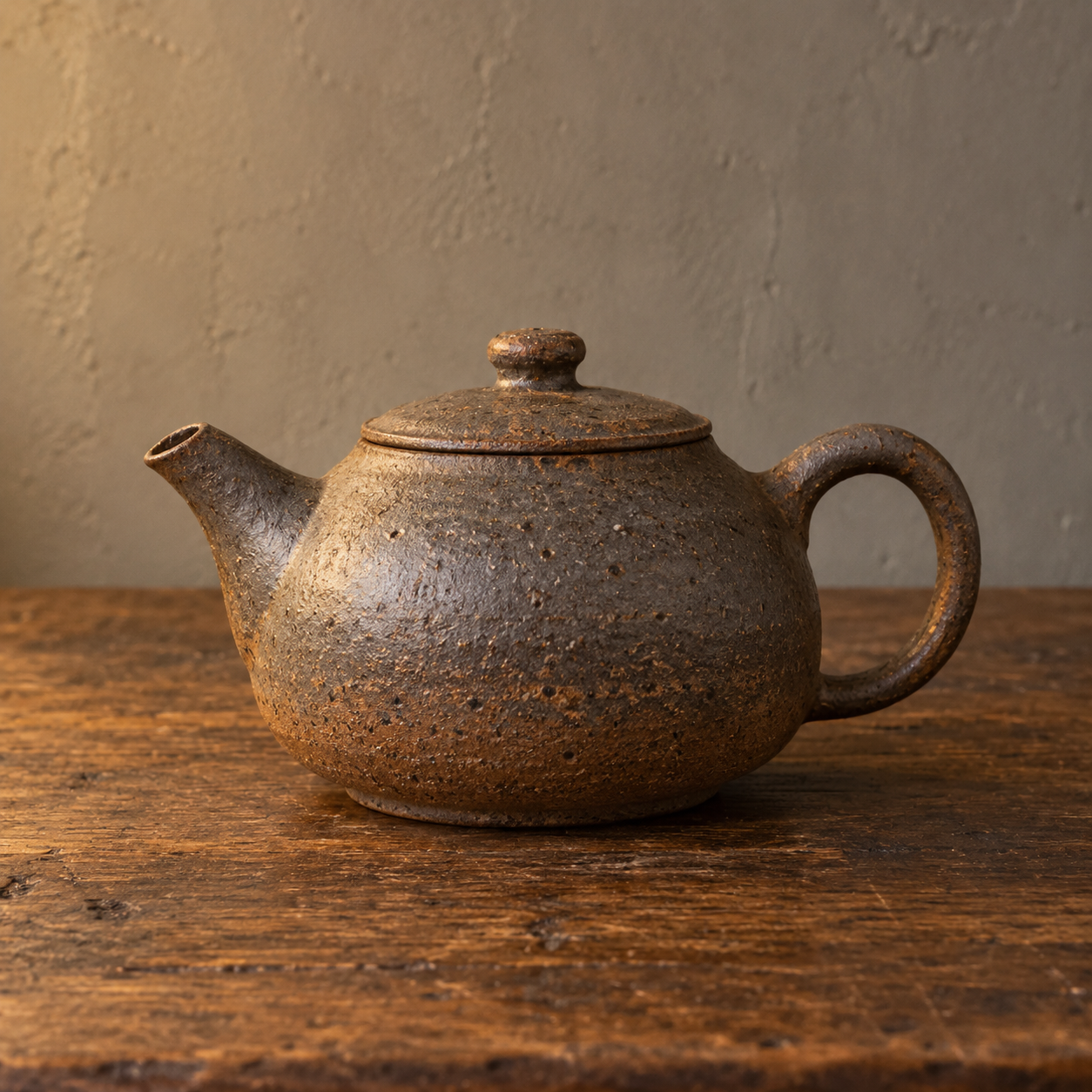
A square product photograph of one handmade stoneware teapot in a workshop.
Model
unknown
Reasoning
unknown
Soft window
Lighting: soft overcast window light, gentle shadows, neutral white balance.
Ask for a calm, neutral product image with restrained contrast.
Observed: The image has a pale grey wall, low-contrast shading, and a broad soft highlight across the teapot.
Generate one square image. Photograph one squat handmade ceramic teapot with a short spout, one loop handle, and a matte iron-rich stoneware glaze on a worn walnut tabletop in a plain workshop. The complete teapot is centered and fully visible, spout pointing left, handle on the right. View at tabletop height with a normal 50 mm perspective. A quiet unadorned grey workshop wall fills the background. Keep the same subject, framing, surface, and background. No cups, flowers, textiles, people, text, logos, watermark, or visible light fixtures.
cat-media
One scene, six physical media
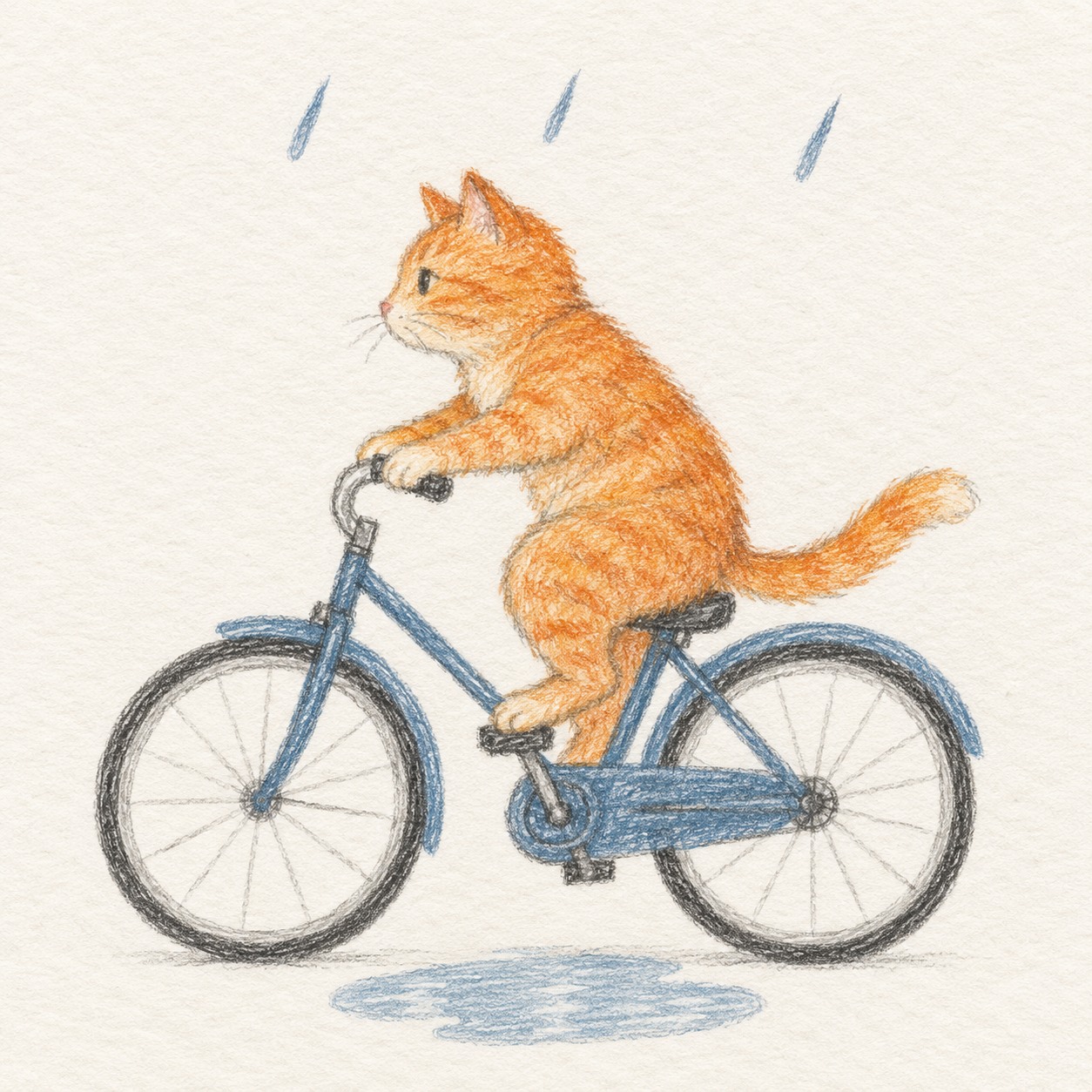
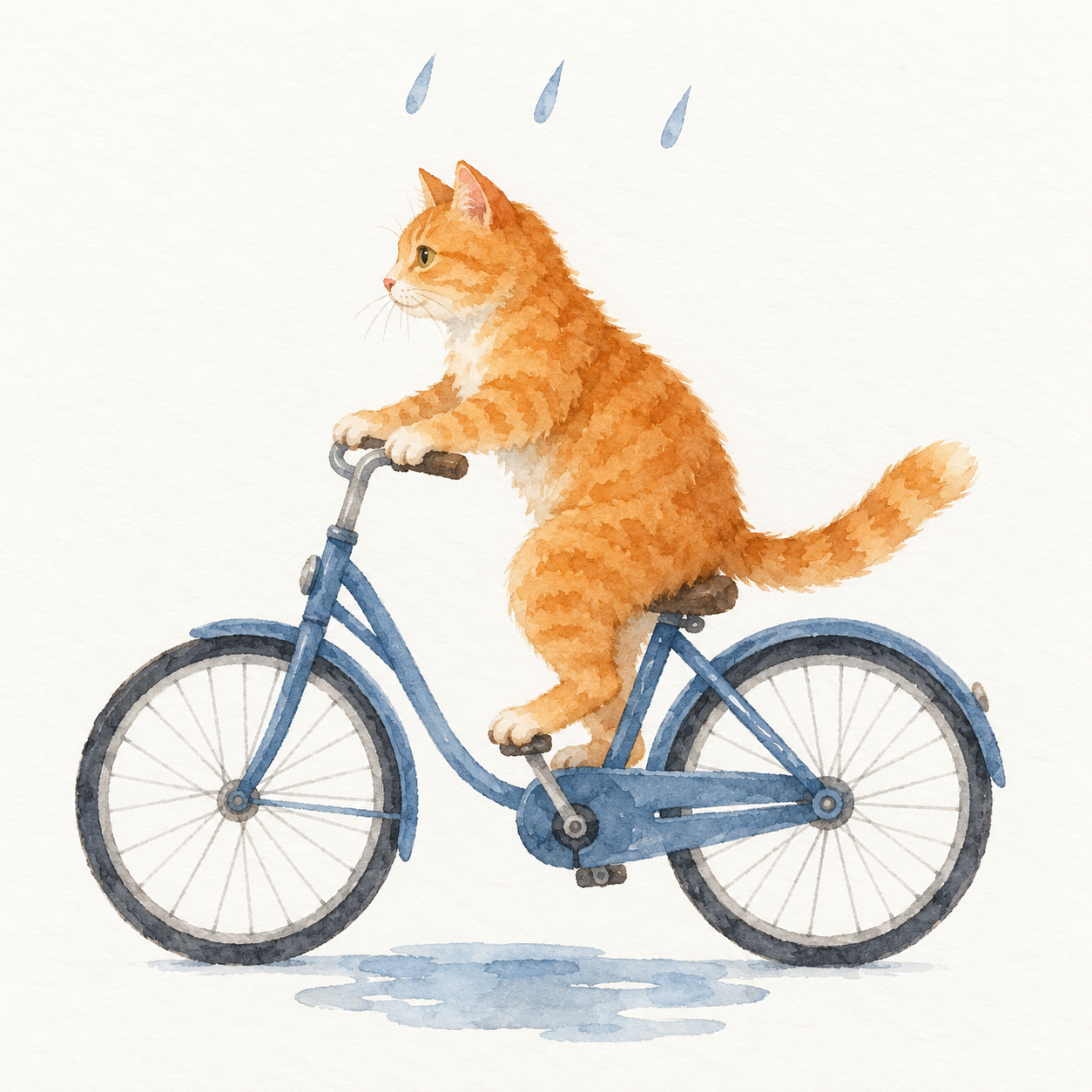
A ginger cat riding a muted blue bicycle through gentle rain
Medium: layered paper-cut collage, visible paper fibers, cut edges, shallow shadows between layers.
Make depth come from stacked cut-paper layers instead of drawn shading.
Observed: Cut-paper seams appear in the cat's fur, wheel spokes, and bicycle frame; shallow shadows separate stacked elements from the off-white ground.
Medium: handmade clay stop-motion set, rounded tactile forms, small fingerprints, soft studio shadows.
Make the scene read as a small physical stop-motion set with soft volume.
Observed: Rounded ears, paws, frame tubes, and rain drops read as modeled forms; soft floor shadows establish a studio-set feel.
Fixed-condition check: The requested small fingerprints are not clearly distinguishable in this output.
cat-clay-r1 · 1254×1254 · 2026-10-03T18:56:42Z
Shared base prompt
Generate one square image. Show one ginger cat riding one muted blue bicycle through gentle rain. Side-on view: the cat faces left, both paws are on the handlebars, both bicycle wheels are fully visible. The cat and bicycle occupy the lower two thirds of the frame. Place exactly three simple rain marks above and one small puddle below. The background is plain off-white. Keep the same subject, action, layout, orange cat, and blue bicycle. No other characters, buildings, flowers, umbrellas, baskets, text, logos, or watermark.
workshop-tone
Workshop portrait: tone controls
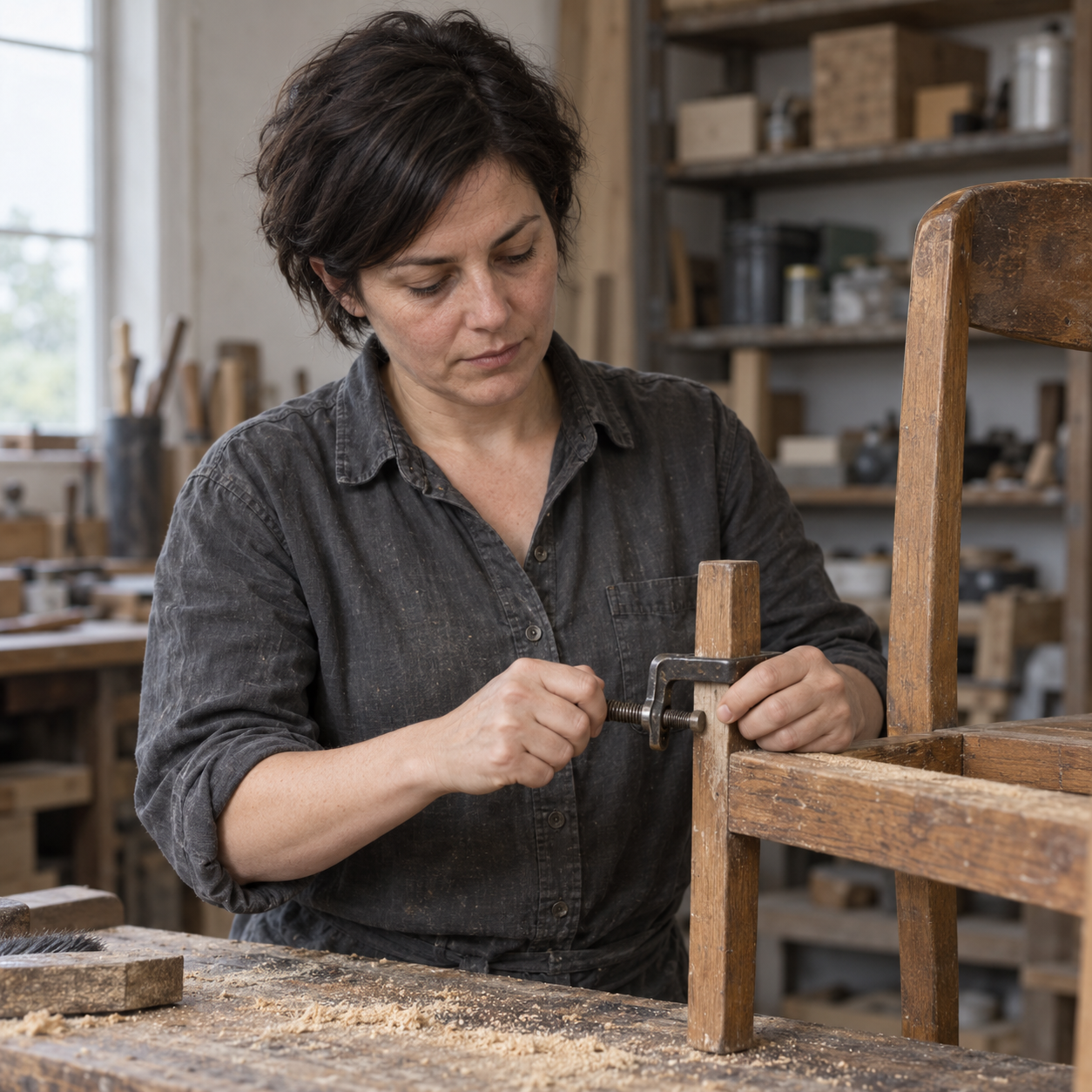
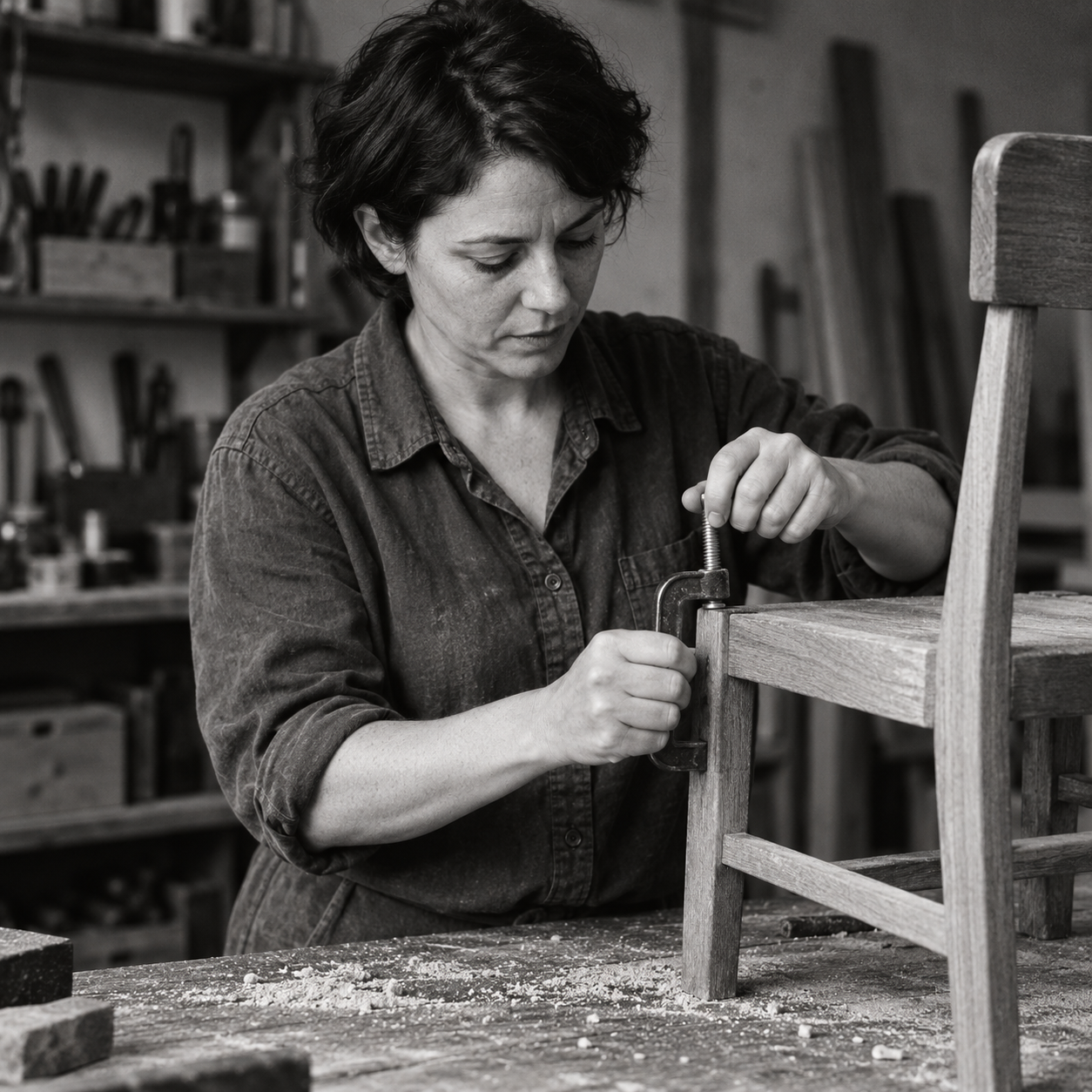
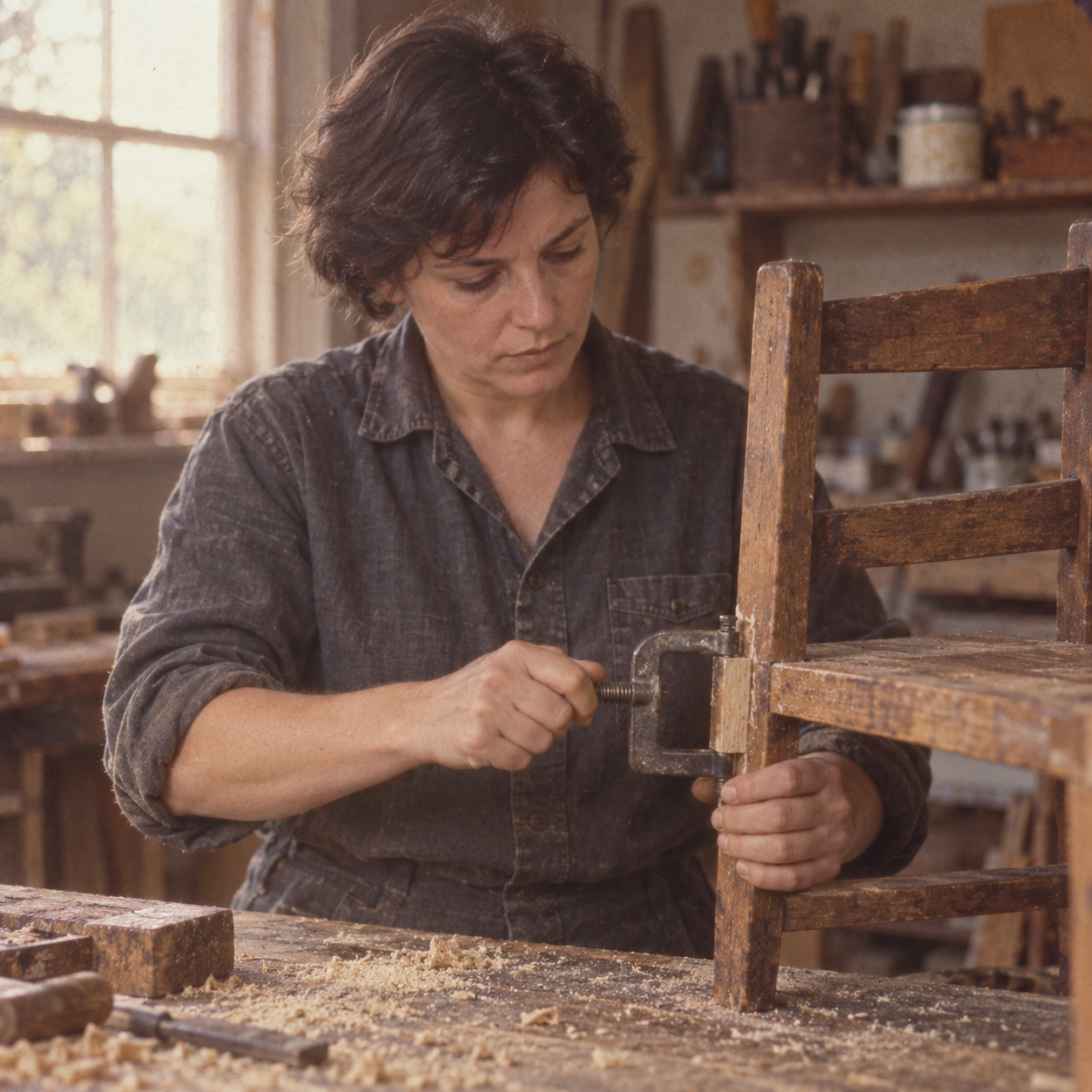
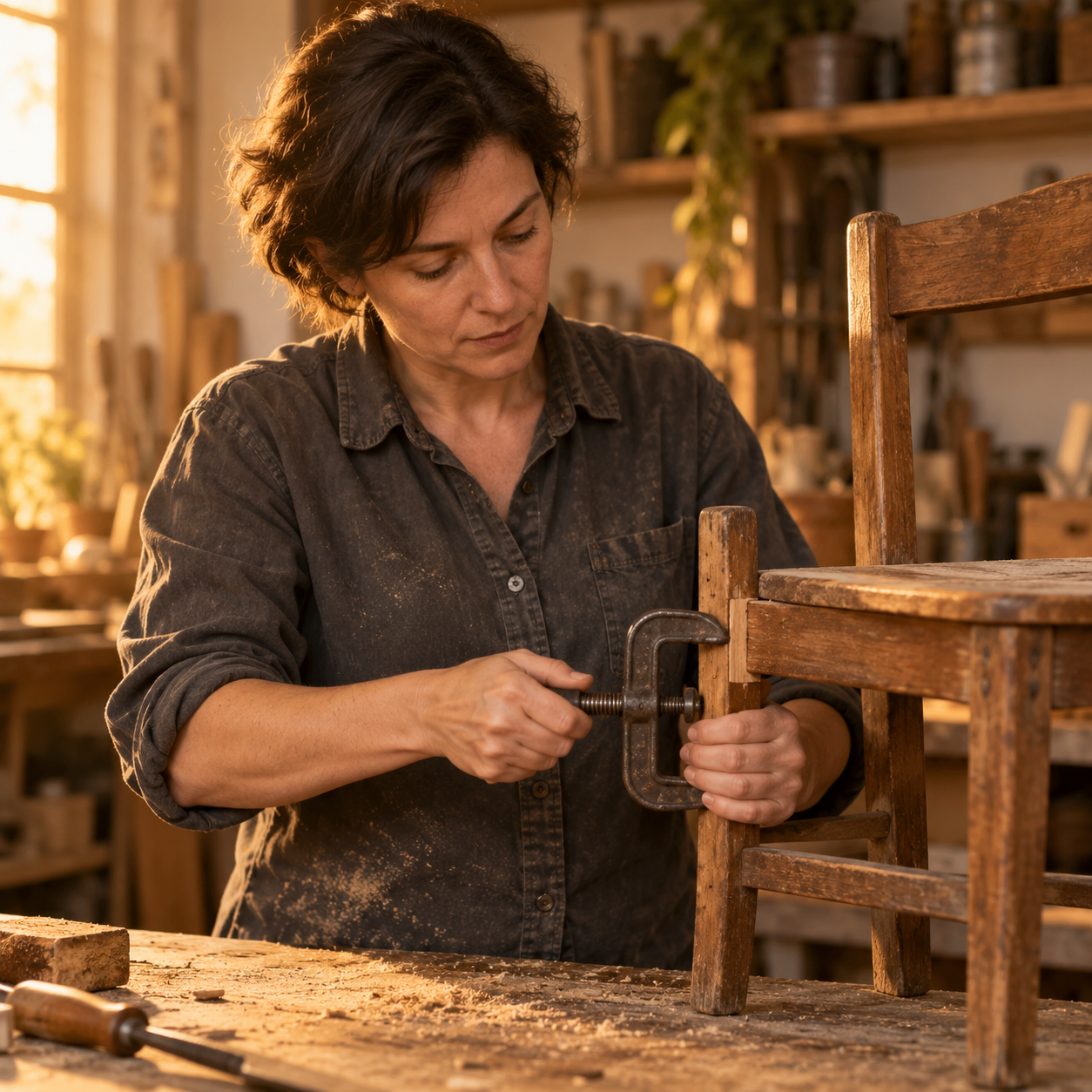
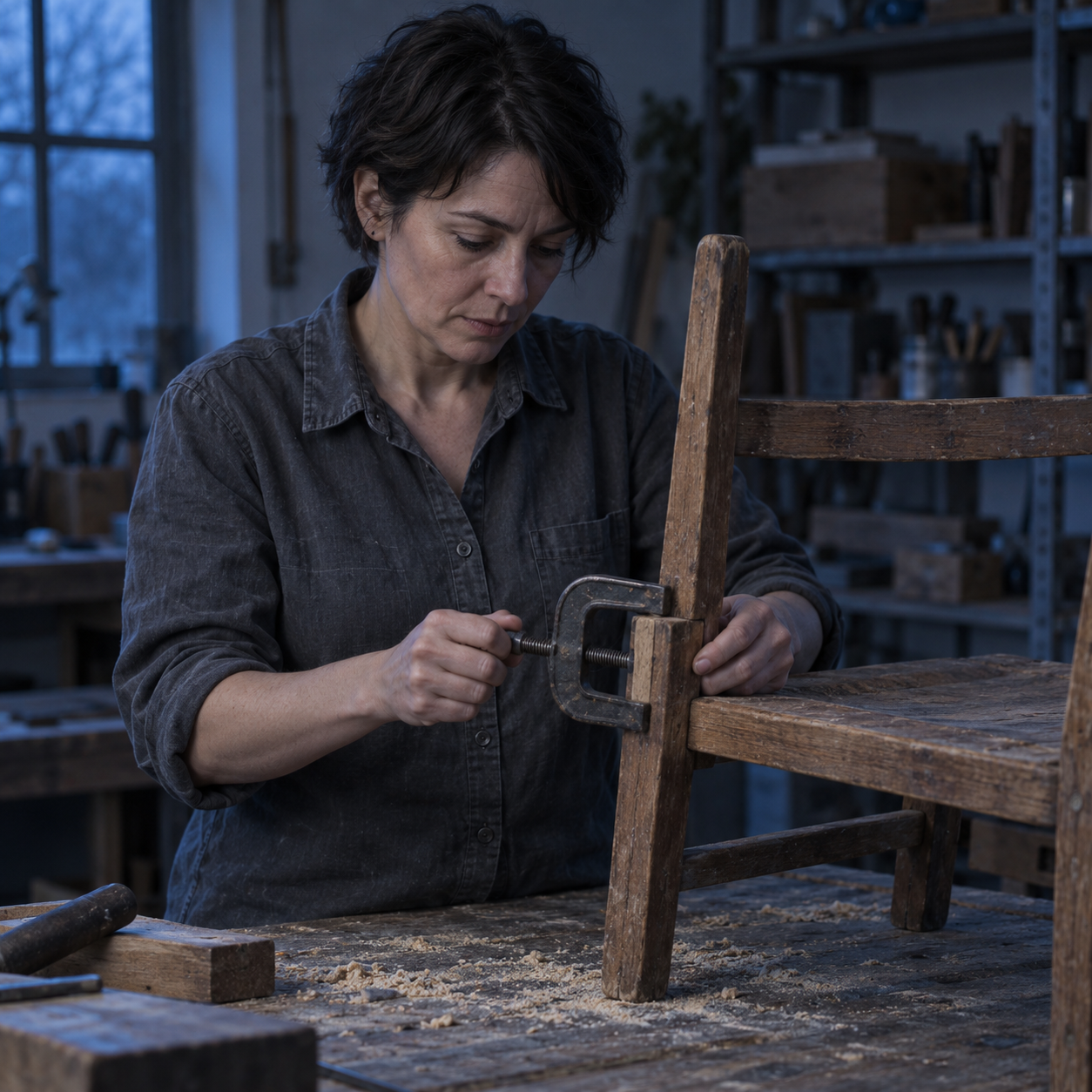
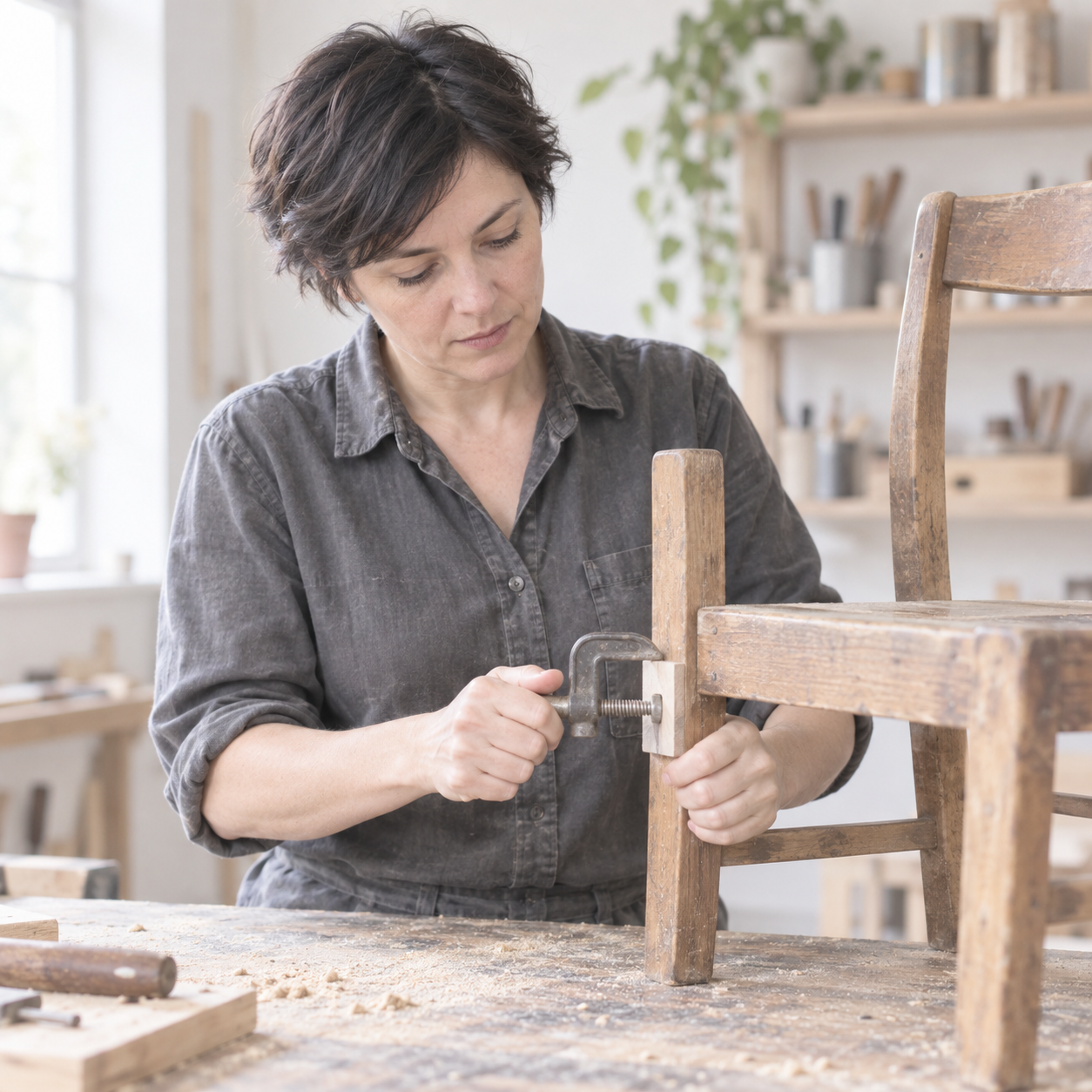
A fictional woman repairing a wooden chair joint with a clamp at a workshop bench.
Use a low-drama color baseline for evaluating later tonal shifts.
Observed: The output has soft neutral daylight, a charcoal shirt, visible sawdust, and a readable clamp at the chair joint. The window is visibly brighter than the requested quiet shelf, but the shelf remains out of focus.
Tone: high-contrast black-and-white silver-gelatin photograph, deep blacks, crisp tonal separation, fine film grain.
Test a tonal treatment that emphasizes shape, grain, and value separation rather than color.
Observed: The output is monochrome with deep shirt and shelf shadows, bright sawdust, and strong separation around the clamp and chair. Fine grain is subtle at this viewing size rather than conspicuous.
Test warm fading, lifted shadows, halation, and visible grain as a film-language bundle.
Observed: The output shifts the workshop toward warm faded browns, with a bright window halo and visible grain across the image. The chair, clamp, both hands, and sawdust remain readable.
Test amber side light and soft highlight roll-off while retaining a practical repair action.
Observed: Amber light reaches the woman, chair, bench, and background shelf, with warm rim light around her hair. A leafy background element is more noticeable than in the neutral run, although it is not a dramatic prop.
Test blue ambient light and restrained highlights without changing the repair brief.
Observed: Blue window light and cool shadows dominate the workshop while the wood remains brown enough to distinguish the chair joint and clamp. The shelf is more structured and visually present than the requested quiet shelf.
Test pale, low-contrast editorial color with diffuse daylight and soft shadows.
Observed: The output is bright and low-contrast, with pale background colors and soft shadows across the woman and chair. The background shelf includes visible plants and containers, so it is less quiet than the stated background constraint.
Generate one square editorial photograph. A fictional 40-year-old woman with short dark hair wears a plain faded charcoal work shirt and repairs one small wooden chair at an ordinary workshop bench. She looks down at a chair joint and holds one small metal clamp with both hands. Frame waist-up from eye level with a normal 50 mm perspective; keep both hands and the chair joint readable. Include light sawdust on the worn bench and one quiet out-of-focus workshop shelf. Keep the same subject description, action, pose, clothing, camera position, and background. No other people, extra hands, dramatic props, text, logos, or watermark.