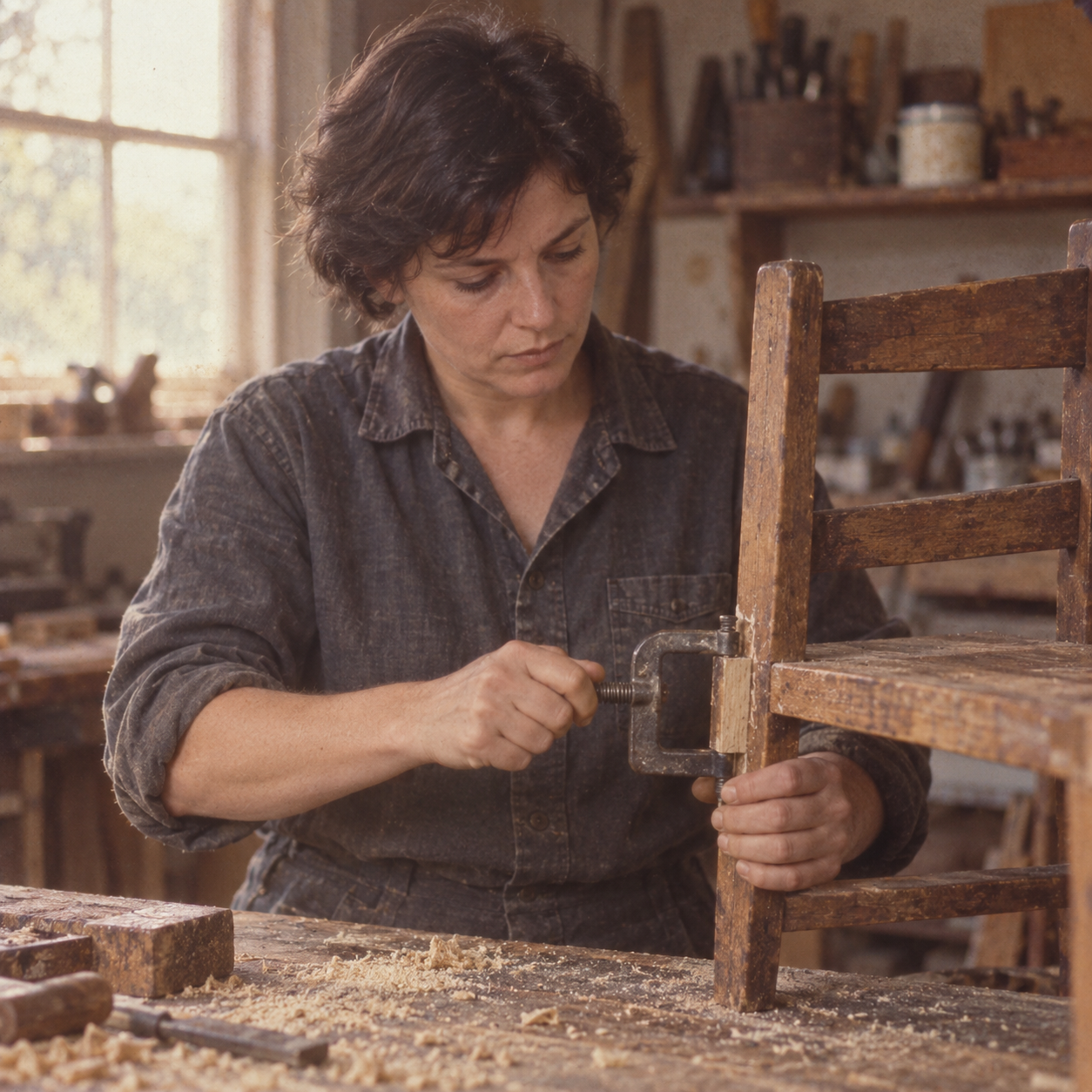

Portrait & color
Neutral documentary
Use a low-drama color baseline for evaluating later tonal shifts.
Recorded AI output
Images / Portrait & color
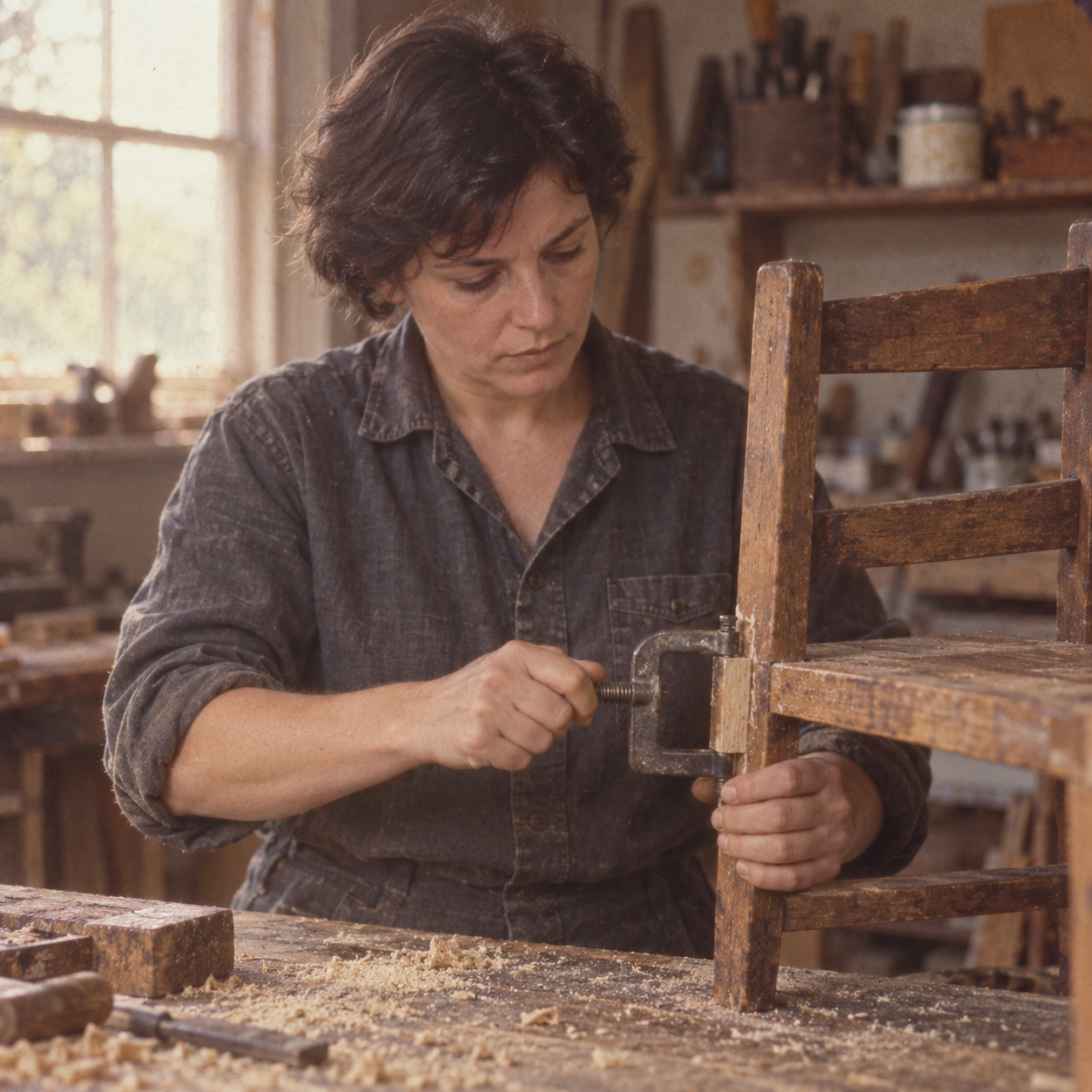
Test warm fading, lifted shadows, halation, and visible grain as a film-language bundle.
See all six expressions ↗Tone: muted 1970s color-negative film, warm faded colors, lifted shadows, gentle halation, visible grain.
The output shifts the workshop toward warm faded browns, with a bright window halo and visible grain across the image. The chair, clamp, both hands, and sawdust remain readable.
One independent output per phrase. Stylistic cues change together. The subject text is fixed; geometry and identity are not locked. This is a descriptive comparison, not a causal test.
Kumyu · image_gen.imagegen
Recorded original generation · no third-party reference images
Original output from the requested Kumyu archive; no third-party reference image used.
Generate one square editorial photograph. A fictional 40-year-old woman with short dark hair wears a plain faded charcoal work shirt and repairs one small wooden chair at an ordinary workshop bench. She looks down at a chair joint and holds one small metal clamp with both hands. Frame waist-up from eye level with a normal 50 mm perspective; keep both hands and the chair joint readable. Include light sawdust on the worn bench and one quiet out-of-focus workshop shelf. Keep the same subject description, action, pose, clothing, camera position, and background. No other people, extra hands, dramatic props, text, logos, or watermark.

Tone: muted 1970s color-negative film, warm faded colors, lifted shadows, gentle halation, visible grain.
Portrait & color
Use a low-drama color baseline for evaluating later tonal shifts.
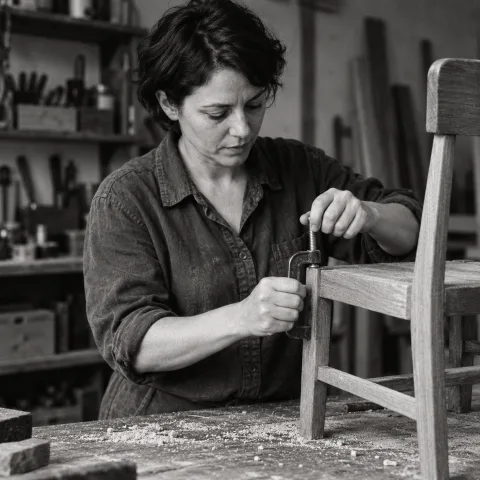
Portrait & color
Test a tonal treatment that emphasizes shape, grain, and value separation rather than color.

Portrait & color
Test amber side light and soft highlight roll-off while retaining a practical repair action.
Choose two works to see their actual outputs and records side by side.
Open comparison ↗